
India's strong GDP performance, kept up even in a period of global uncertainty, reflects structural strength built through consistent policy reform. As the country moves towards becoming the world's third-largest economy, the key challenge is not the pace of growth, but ensuring that this momentum is sustainable, productivity-driven and inclusive.
In this context, the next major frontier for India's economic transformation lies in accelerating factor market reforms.
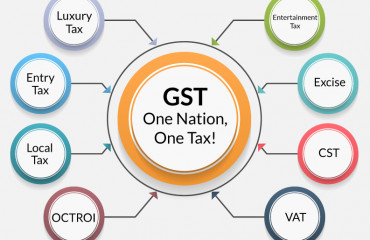
Significant progress has already been achieved. The implementation of GST 2.0 marks a major milestone in India's indirect tax architecture. Rationalization of slabs, correction of inverted duty regimes and simplified technology-enabled compliance are reducing friction for businesses and stimulating consumption.
Over time, if the GST Council considers bringing fuel products under the GST regime, it would represent a structural inflection point that dramatically lowers logistical costs and improves India's export competitiveness.
Similarly, the notification of four labour codes represents a decisive step toward modernizing India's labour market. The consolidation of 29 laws into a coherent framework simplifies compliance, promotes formalization, introduces a unified definition of wages and strengthens worker protection. Widespread implementation across states, ideally in a time-bound manner, will determine the extent to which India can unlock the full potential of labour reforms.
With labour and tax reforms advancing, the next phase of economic stewardship must focus on the core factors of production—land, power and capital—that determine the economy's long-term trajectory of growth.
Land reforms: Land remains one of the most constrained resources in India's development journey. Initiatives under the National Industrial Corridor Development Programme are promising and the expansion of plug-and-play industrial parks will be vital. Some of the key land reforms that can be undertaken include:
First, alternative public-private partnership (PPP) models for industrial development. For instance, government land can be developed via an equity model, wherein the developer builds the park and sub-leases plots to industries, while the government holds a maximum equity stake of 49%.
Another option is a revenue-sharing model, where a private developer and the government form a special purpose vehicle (SPV) for a project that develops industrial infrastructure and sub-leases it to industries.
In all these models, the industrial park developer would get full freedom to run and manage such a park efficiently.
Second, encourage states to streamline land conversion, zoning, building permits and environmental clearances under a unified digital window for enhancing the ease of doing business. While the Business Reforms Action Plan that promotes competition among states covers reforms related to land administration and land use, the Central government may consider incentivizing states by linking these reforms to their financial assistance and additional borrowings.
Power reforms: India's energy transition requires not just expanding generation capacity, but also ensuring cost-competitiveness, reliability and grid stability. The next wave of power reforms must address these key issues.
First, high industrial tariffs, driven by cross- subsidization, remain a major barrier to India's manufacturing competitiveness. Promoting cost-reflective tariffs and transitioning to direct benefit transfers for targeted consumer categories can lower tariffs for industry while improving cost recovery for discoms.
Second, augmentation of India's transmission and distribution (T&D) infrastructure is crucial. Policy reforms should include streamlining right-of-way (RoW) rules to enable faster land acquisition and strengthening project financing by providing viability-gap funding.
Third, India's transition to a renewable-heavy grid demands strong storage solutions. Establishing pooled storage at the substation level can improve resilience and reduce costs.
Finally, India needs unified policies across states that promote the consumption of renewable power by industry. The country must address issues such as changes in time-of-day tariffs, grid-support charges on large-scale open-access solar power and night-time banking of solar power generated in the daytime that increase industrial power bills and create uncertainty.
Capital market reforms: India's ambitions require deep capital markets to enable finance beyond bank credit. Yet, corporate bonds account for only around 18% of GDP, far lower than South Korea's 80% and China's 36%. Most issuances remain concentrated among corporates with AA ratings and above, limiting access to finance for mid-size and growth-stage firms that generate the bulk of jobs.
Deepening the corporate bond market requires (a) expanding mandatory market borrowing beyond top-rated companies and (b) encouraging prudent fund allocations by insurers and provident/pension funds to high-quality but lower-rated bonds.
Trust-based governance: Ultimately, factor market reforms will be most effective within a regulatory environment grounded in trust, predictability and transparency. India has made notable progress in reducing compliance burdens and decriminalizing minor offences, and that momentum must continue. The High-Level Committee for Regulatory Reforms announced in the Union budget for 2025-26 has identified several such reform measures. Implementing these will be key.
A shift in favour of risk-based regulation, predictable regulatory calendars and wider adoption of single-window digital clearance systems will be essential. Coordinated Centre-state action will determine how effectively India can raise the share of manufacturing in GDP from 17% to 25%.
India is at a critical juncture in its development. Global supply chains are being restructured, capital is seeking resilient investment destinations and a transition to clean energy is reshaping industries worldwide.
With bold reforms in land, power and capital, supported by a high-trust regulatory environment, India has an opportunity not only to become the world's third-largest economy, but to emerge as a globally competitive and innovation-led manufacturing hub.
The author is president, FICCI and vice chairman, RPG Group.